Estimated reading time: 9 minutes
Table of contents
- Improving Visibility Across Multi-Site Operations
- How EAM Systems Reduce Downtime and Operational Friction
- The Real Problem is Lack of Visibility
- Maximising Asset Lifespans and Reducing Equipment Spend
- Slashing Maintenance Costs with Centralised EAM
- Why Enterprise Asset Management has become a Strategic Business Platform
- Final Thoughts
- FAQs
In many large organisations, millions of dollars in equipment, maintenance and operational costs are lost through inefficient asset management processes — including missing assets, reactive maintenance, duplicate purchases, manual tracking and poor asset visibility across sites and departments.
As organisations grow, these challenges become increasingly difficult to manage across multi-site operations, multiple systems, contractors, business units and global operations.
Without accurate asset visibility, organisations often struggle to track equipment, optimise maintenance, control operational costs and make informed operational decisions.
That’s why Enterprise Asset Management (EAM) systems are becoming essential for asset-intensive organisations seeking greater asset visibility, operational efficiency and lifecycle control across critical assets and tools and equipment.
Improving Visibility Across Multi-Site Operations
Managing multi-site assets is incredibly difficult when teams rely on fragmented systems, spreadsheets, and manual tracking. This disconnect inevitably leads to inconsistent records, delayed maintenance, and blind spots in inventory. Toss in the logistical nightmare of tracking equipment moving between locations, and you quickly lose operational control.
An Enterprise Asset Management (EAM) system eliminates this chaos by bringing all your data into one central platform. It standardises asset records, maintenance history, and reporting across every site—ensuring teams, contractors, and departments finally work from the same page.
With total visibility over your multi-site operations, you can:
- Streamline scheduling & inventory: Keep maintenance on track and maintain crystal-clear visibility over parts.
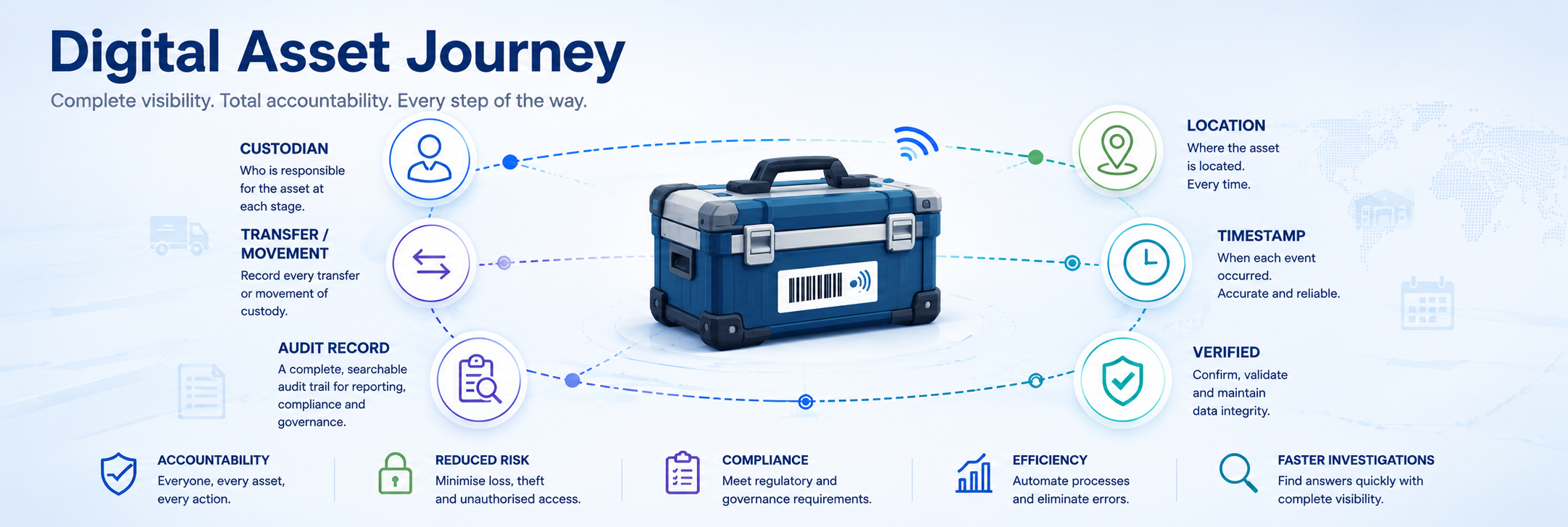
- Track assets on the move: Seamlessly manage and log asset transfers between locations.
- Tighten accountability: Keep a clear audit trail for external contractors and service providers.
The payoff? Fewer wasteful purchases, higher asset utilisation, and stress-free daily operational planning.
How EAM Systems Reduce Downtime and Operational Friction
Modern Enterprise Asset Management (EAM) systems are designed to reduce operational friction by streamlining processes and improving asset management. Here are some key strategies to achieve this:
Centralised Asset Data: In many large organisations, maintenance teams rely on disconnected spreadsheets, ERP records and paper-based inspections. This creates inconsistent asset data, delayed maintenance responses and duplicate procurement. A centralised EAM platform eliminates these silos by giving operations teams one live source of truth for assets, maintenance history and equipment utilisation.
Automated Maintenance Scheduling: By automating maintenance scheduling and work orders, EAM systems minimise manual tasks, which in turn reduces errors and delays. This leads to more efficient maintenance practices and better decision-making.
Real-Time Monitoring and Analytics: EAM systems offer real-time monitoring and analytics, allowing organisations to optimise asset utilisation and extend equipment lifespan. This is crucial for maintaining operational efficiency and reducing costs.
Integration with ERP Systems: EAM systems can integrate seamlessly with ERP systems, enhancing data consistency and facilitating better decision-making across departments. This integration is particularly beneficial for asset-intensive organisations.
AI-Powered Support: Utilising AI-powered support for executing maintenance tasks can lead to quicker resolution of complex issues and improved maintenance quality. This is achieved through AI-driven guidance and automated inspection.

When work gets in the way of work: Reclaiming organizational capacity Article: 16-min read 23 March 2025 How can organizations create more slack and free up workers to focus on what really matters? By Stephen Harrington, Corrie Commisso, Kevin Moss, William D. Eggers, Tom Alstein, Julie Duda
Research from firms including Deloitte and McKinsey continues to highlight the growing importance of operational visibility, predictive maintenance and connected asset management systems.
- 10–30% lower maintenance costs through proactive and predictive maintenance strategies.
- 20–50% less unplanned downtime by identifying issues before equipment failure occurs.
- Improved asset utilisation through better visibility, tracking and lifecycle management.
- Longer equipment lifespan through preventive maintenance and condition monitoring.
- Faster compliance and audit reporting using centralised digital records and maintenance histories.
- Lower spare parts inventory costs through improved forecasting and inventory control.
- Reduced operational friction by centralising maintenance workflows, work orders and asset data.
- Better cross-site operational visibility and standardised maintenance processes across global operations.
- Improved technician productivity through mobile-enabled maintenance tools and real-time access to information.
- Stronger operational decision-making through integrated analytics, IoT monitoring and real-time asset intelligence.
The Real Problem is Lack of Visibility
In many organisations, teams buy new equipment simply because nobody can find existing assets. An EAM system solves this by creating one central source of truth for assets, tools, maintenance history, locations and usage data. That visibility is where the ROI starts. The savings are real, but the biggest benefit is asset visibility.
Most large organisations do not actually know:
- what assets they own
- where those assets are
- who is using them
- whether they are maintained properly
- whether they are being fully utilised
That creates a predictable set of problems:
- lost equipment
- duplicate purchases
- reactive maintenance
- inaccurate inventories
- unnecessary downtime
- higher operating costs
Maximising Asset Lifespans and Reducing Equipment Spend
EAM systems reduce equipment costs by improving asset visibility, preventing duplicate purchases, extending equipment lifecycles and reducing asset loss through proactive maintenance, real-time tracking, predictive analytics and centralised asset management, allowing organisations to optimise utilisation, reduce unnecessary replacement spending and make better operational decisions across large-scale environments.
Preventing Duplicate Purchases
One of the fastest ways organisations waste money is by repurchasing assets they already own. Without proper asset visibility, equipment sits unused at another site while procurement orders more.
A modern EAM system gives teams real-time visibility into:
- asset location
- availability
- condition
- assignment history
- utilisation rates
That means organisations use existing assets before buying new ones. For large enterprises managing thousands of tools, devices, vehicles or mobile assets, this alone can save millions.
Extending Equipment Lifecycles
Reactive maintenance is expensive. When maintenance only happens after failure, organisations deal with:
- emergency repairs
- operational disruption
- shortened equipment life
- higher replacement costs
EAM systems shift maintenance from reactive to proactive. They centralise:
- maintenance schedules
- inspections
- service history
- condition monitoring
- predictive maintenance alerts
The result is fewer failures and longer-lasting equipment. That directly reduces capital replacement costs.
Reducing Asset Loss and Theft
Large organisations often struggle with missing tools and mobile equipment across multiple sites. Modern EAM platforms use:
- RFID
- barcode tracking
- GPS
- IoT sensors
to track:
- who used an asset
- where it was last seen
- transfer history
- return status
This improves accountability and reduces unnecessary replacement spending. Asset loss is often treated as a minor operational issue, but at enterprise scale it becomes a significant hidden cost.
Slashing Maintenance Costs with Centralised EAM
EAM systems reduce maintenance costs by centralising maintenance workflows, automating preventive maintenance schedules and improving real-time visibility across assets, allowing organisations to reduce manual processes, minimise reactive repairs, prevent equipment failures and reduce operational friction through more efficient maintenance planning, faster issue resolution and better utilisation of maintenance resources.
Reducing Unplanned Downtime
Downtime is one of the biggest operational costs in any asset-intensive business.
EAM systems reduce downtime through:
- automated maintenance scheduling
- predictive analytics
- real-time monitoring
- mobile maintenance workflows
- failure trend analysis
This allows maintenance teams to fix issues before they become operational failures. Even small reductions in downtime can have a significant financial impact across manufacturing, mining, logistics and infrastructure operations.
Improving Spare Parts Management
Many organisations carry excessive spare parts inventory because they lack accurate maintenance and usage data.
EAM systems improve inventory control by helping organisations:
- forecast demand
- track usage patterns
- standardise inventory
- reduce overstocking
This lowers warehousing costs and frees up working capital without increasing operational risk.
Standardising Asset Management Across Global Operations
Large organisations often run different maintenance processes across sites and regions. That creates inefficiency, inconsistent reporting and poor operational visibility.
An enterprise EAM platform standardises:
- maintenance workflows
- asset classifications
- inspections
- reporting
- compliance processes
This gives leadership consistent data across the entire organisation and supports better operational decision-making.
Why Enterprise Asset Management has become a Strategic Business Platform
Modern EAM systems are no longer just maintenance databases. The organisations seeing the strongest ROI are integrating EAM with:
- ERP systems
- HR systems
- IoT devices
- RFID tracking
- AI analytics
- GIS mapping
- digital twins
- mobile workforce tools
This creates a connected operational platform that improves both asset performance and financial control. The biggest gains come from combining the following into one system:
- visibility
- automation
- predictive maintenance
- lifecycle management
- operational intelligence
Final Thoughts
For asset-intensive organisations, asset management is no longer just a maintenance function. It has become a strategic operational platform that improves visibility, reduces capital waste and supports smarter enterprise-wide decision-making. Without accurate visibility, organisations continue losing money through:
- unnecessary purchases
- avoidable downtime
- missing equipment
- inefficient maintenance
- poor asset utilisation
An effective Enterprise Asset Management system changes that. It helps organisations reduce costs, improve operational efficiency and make better decisions across global operations.
A modern EAM system combines asset tracking, maintenance management and operational visibility into one platform. That is why leading organisations now treat enterprise asset management software as a strategic operational platform rather than simply a maintenance system.
Platforms such as Hardcat combine RFID tracking, easy auditing, maintenance management and operational visibility into a single enterprise environment.
Want better visibility and control across your assets, tools and equipment?
Speak with an asset management specialist about improving asset visibility, reducing operational costs and building a smarter asset management strategy.
FAQs
Enterprise Asset Management (EAM) is a system for tracking, maintaining and optimising an organisation’s physical assets throughout their entire lifecycle to improve operational efficiency, reduce costs and increase asset visibility.
Computerised Maintenance Management Systems (CMMS) primarily focus on maintenance activities such as work orders, scheduling and repairs, while Enterprise Asset Management (EAM) systems provide a broader enterprise-wide approach that includes asset lifecycle management, asset tracking, compliance, inventory control, financial integration, analytics and operational visibility across multiple sites and business functions.
Asset management software provides organisations with a centralised platform to manage assets throughout their entire lifecycle, combining capabilities such as asset registers, maintenance management, work orders, inventory control, barcode and RFID tracking, mobile applications, reporting dashboards, ERP integration, role-based security, multi-site visibility, condition monitoring, alerts, chain-of-custody tracking and IoT-enabled monitoring to improve operational efficiency, increase asset visibility and reduce manual processes and operational friction.
RFID improves asset management by providing real-time visibility and automated tracking of assets, tools and equipment through wireless identification technology, allowing organisations to quickly locate assets, reduce loss and theft, improve inventory accuracy, streamline audits, strengthen chain-of-custody tracking and reduce the manual effort associated with traditional asset management processes.
Enterprise Asset Management (EAM) systems benefit a wide range of asset-intensive industries including manufacturing, mining, healthcare, utilities, transport, logistics, aviation, defence, government, facilities management and infrastructure by improving asset visibility, reducing downtime, streamlining maintenance processes and supporting compliance and operational efficiency across complex operations.