Estimated reading time: 12 minutes
Table of contents
- What is Asset Chain of Custody?
- Why is Chain of Custody Important?
- How Does Chain of Custody Work?
- Maintain Chain of Custody Anywhere with Mobile Asset Management
- What is Digital Chain of Custody?
- Industries that Benefit from Chain of Custody
- Common Challenges with Manual Chain of Custody
- Frequently Asked Questions
- Choosing the Right Chain of Custody Solution
- Ready to Improve your Chain of Custody?
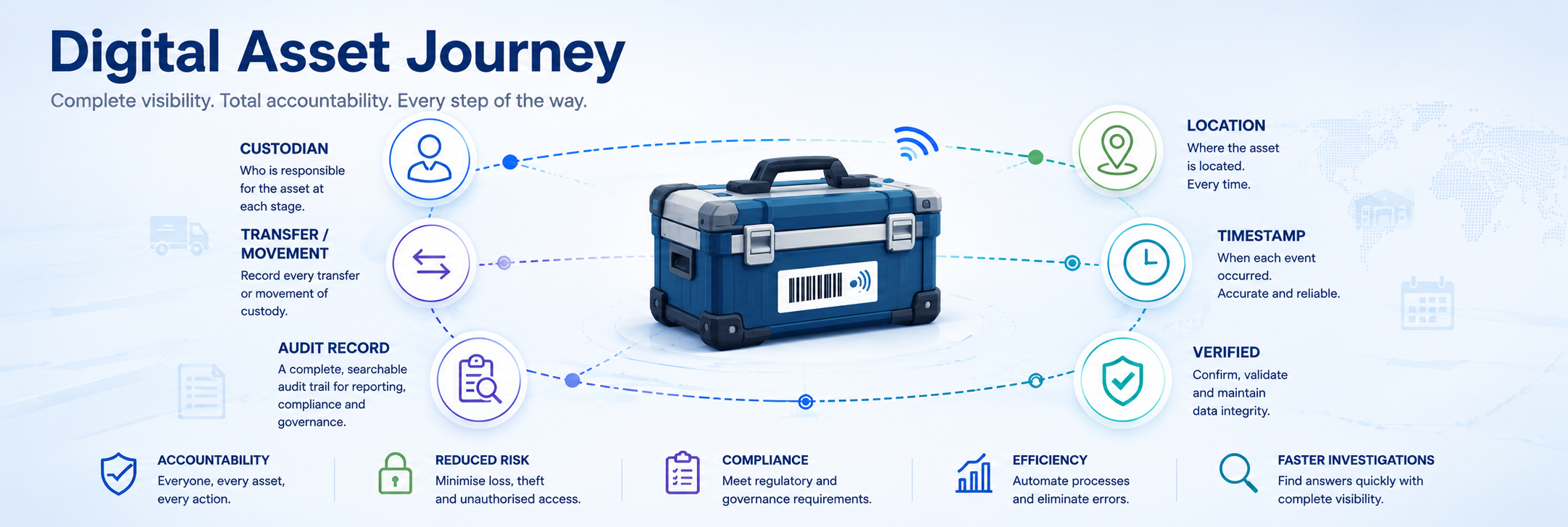
Whether managing physical assets, critical equipment, evidence or high-value inventory, organisations need to know who has an asset, where it is located and when custody changed. Maintaining an accurate chain of custody is essential for operational accountability. Many organisations rely on digital asset management systems that use barcode scanning and RFID technology to automate custody records, improve traceability and maintain a complete history of every asset transaction.
What is Asset Chain of Custody?
Asset chain of custody is the documented process of recording who has possession of an asset, where it is located, and every transfer throughout its lifecycle. It creates a verifiable audit trail that helps organisations maintain accountability, demonstrate compliance, and reduce the risk of loss, theft or unauthorised access.
Maintaining an accurate chain of custody also depends on the quality of your asset information. Even the most robust tracking processes can be undermined by incomplete, duplicated or outdated asset records. Learn more about how bad asset data can wreak havoc on operations.
Why is Chain of Custody Important?
An effective chain of custody helps organisations maintain accountability, demonstrate compliance and reduce operational risk. By documenting every asset movement and custody transfer, organisations gain greater visibility, strengthen governance and create a reliable audit trail that supports informed decision-making.
How Does Chain of Custody Work?
Every time an asset changes location, custody or responsibility, that event should be recorded within an asset management system. An effective chain of custody process captures each transaction to create a complete history of the asset from acquisition through to disposal. This ensures organisations always know where an asset is, who is responsible for it and when custody changed.
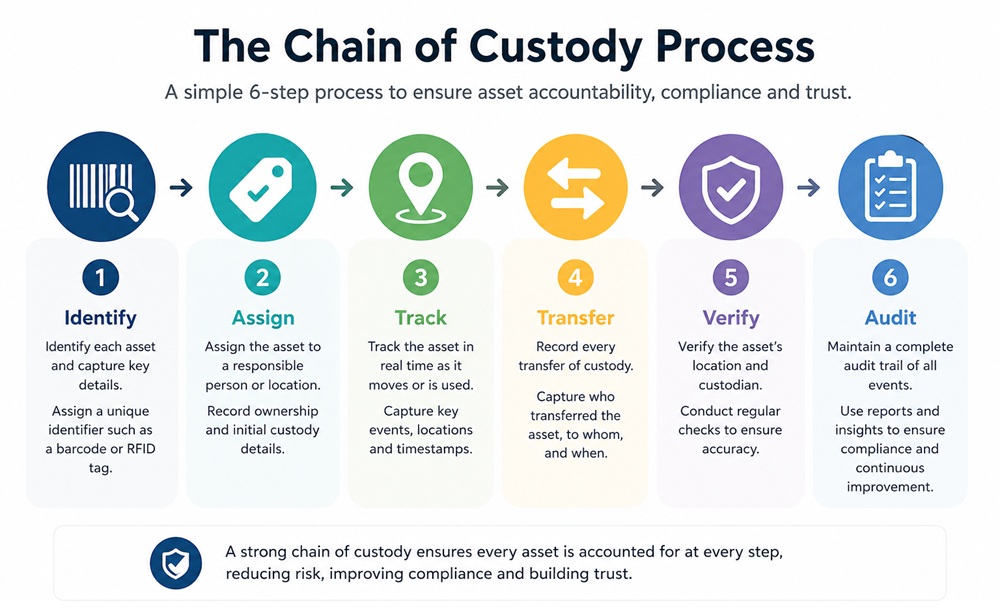
Modern digital asset management systems automate chain of custody processes using barcode scanning using barcode scanning, RFID technology and mobile applications, providing real-time visibility of asset movements while maintaining a complete audit trail.
In many organisations, maintaining a chain of custody also requires verifying that assets are physically present at their recorded location. This is often referred to as Proof of Presence—the ability to confirm that an asset was seen, scanned or verified at a specific place and time. Learn more about Proof of Presence and Enterprise Asset Management and how it strengthens accountability across the asset lifecycle.
Regular asset audits also play an important role in maintaining an accurate chain of custody by confirming that assets are where they are expected to be and that recorded information reflects actual conditions. Learn how Asset Audits and Operational Reliability support better asset management.
Maintain Chain of Custody Anywhere with Mobile Asset Management
Using the Hardcat Lebosi Mobile App, authorised users can maintain an accurate chain of custody wherever work takes place. From a smartphone or tablet, personnel can issue and return assets or inventory, record custody transfers, update asset locations, loan equipment to users, transfer assets between departments or sites, and capture new locations as they are discovered.
Barcode and RFID scanning ensure every transaction is recorded in real time against the central asset register, giving organisations real-time visibility into asset movements, custody transfers and asset locations while creating a complete, searchable audit trail. This eliminates reliance on paper forms, reduces delayed data entry and improves data accuracy. Even field teams working across multiple locations can keep asset records current, improving accountability, reducing administrative effort and ensuring organisations always know who has an asset, where it is located and when custody changed.
What is Digital Chain of Custody?
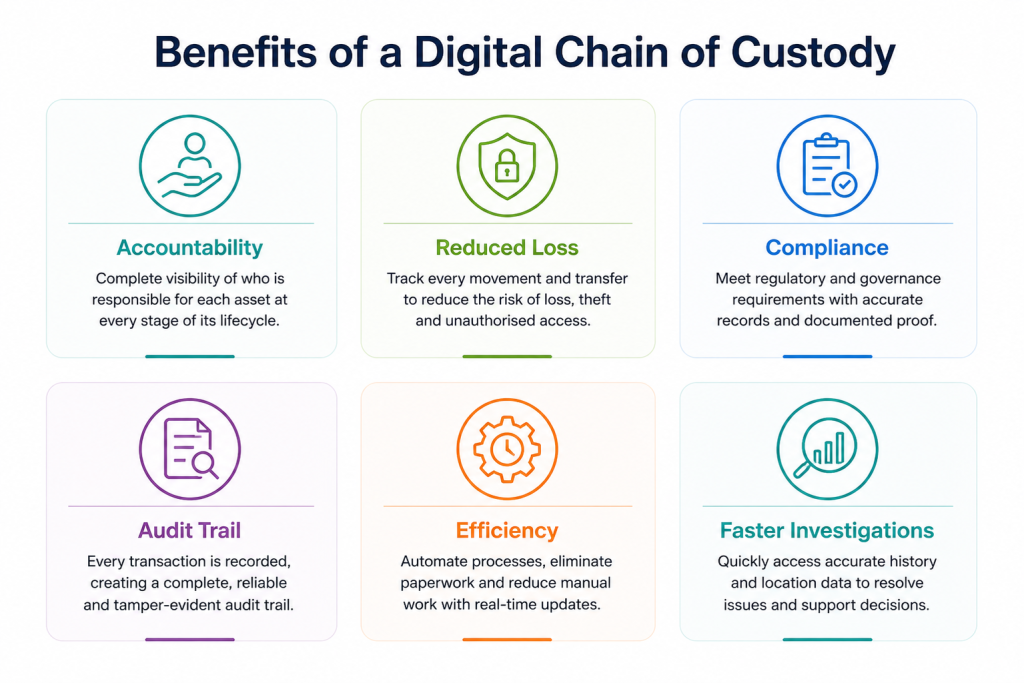
Implementing a digital chain of custody delivers more than accurate record keeping. It improves accountability, strengthens governance and gives organisations greater confidence that assets are being managed consistently throughout their lifecycle. Key benefits include:
Strengthens Asset Accountability
A well-managed chain of custody provides complete visibility into who is responsible for an asset at every stage of its lifecycle. By recording each custody transfer, location update and transaction, organisations reduce uncertainty and ensure every asset can be traced to an individual, department or location. This level of accountability supports better governance and encourages consistent asset management practices.
Reduces Asset Loss and Theft
Assets that are regularly tracked and monitored are less likely to be misplaced, lost or stolen. Recording every movement and custody change creates transparency, making it easier to identify discrepancies and investigate missing assets. Digital chain of custody systems also discourage unauthorised access by maintaining a permanent record of all asset transactions.
Supports Regulatory Compliance
Many organisations operate under strict regulatory, contractual or internal governance requirements. A documented chain of custody provides evidence that assets have been managed according to established policies and procedures. Maintaining accurate records helps organisations demonstrate compliance during audits, inspections and accreditation processes while reducing the risk of non-compliance.
Creates a Complete Audit Trail
Every custody transfer, location change and user interaction is recorded to create a comprehensive audit trail. This historical record provides confidence that information is accurate and readily available when needed. A complete audit trail also simplifies reporting and allows organisations to review an asset’s history from acquisition through to disposal.
Improves Operational Efficiency
Replacing manual paperwork and spreadsheets with digital asset tracking reduces administrative effort and improves data accuracy. Barcode scanning, RFID technology and mobile applications allow staff to record asset movements quickly while automatically updating central records. This reduces duplication, saves time and enables teams to focus on higher-value activities.
Speeds Up Investigations and Reporting
When questions arise about an asset’s location, ownership or movement history, a digital chain of custody enables organisations to access accurate information immediately. Rather than searching through paper records or multiple systems, users can quickly identify where an asset has been, who was responsible for it and when custody changed. This improves incident investigations, supports decision-making and reduces operational disruption.
Industries that Benefit from Chain of Custody
Organisations across many industries rely on chain of custody processes to maintain accountability, improve traceability and demonstrate compliance. Whether managing critical assets, regulated equipment or sensitive items, a documented audit trail helps reduce risk and supports operational efficiency.
Defence, Military and Maritime
Defence organisations manage high-value assets, weapons, equipment and mission-critical resources that require strict accountability. Maintaining a documented chain of custody ensures every asset movement and custody transfer is recorded, supporting operational readiness, security and compliance with defence policies and procedures.
Healthcare and Aged Care
Hospitals and healthcare providers rely on chain of custody to track medical equipment, clinical assets and specialised devices throughout their lifecycle. Accurate asset records help improve equipment availability, reduce the risk of loss and support regulatory compliance while ensuring critical assets are available when needed.
Government Departments
Government agencies are responsible for managing public assets efficiently and transparently. A documented chain of custody provides clear evidence of asset ownership, location and responsibility, helping agencies strengthen governance, improve accountability and support audit and reporting requirements.
Emergency Services
Police, fire and emergency service organisations often manage critical equipment and, in some cases, evidentiary items where complete traceability is essential. Recording every custody transfer and asset movement helps maintain operational readiness while supporting investigations, compliance and public confidence.
Mining
Mining operations depend on the availability of specialised tools, safety equipment and mobile assets across large and often remote sites. A digital chain of custody helps organisations track asset movements, reduce losses, improve equipment utilisation and maintain compliance with workplace safety requirements.
Education
Universities, schools and research institutions manage thousands of assets, including laboratory equipment, IT devices, teaching resources and specialised instruments. Chain of custody processes help maintain accurate asset records, improve accountability and support funding, audit and asset verification requirements.
Although these industries commonly rely on chain of custody processes, any organisation responsible for high-value, regulated or business-critical assets can benefit from maintaining a documented audit trail. Whether managing a handful of critical assets or thousands of enterprise assets across multiple sites, maintaining a documented chain of custody improves accountability and operational confidence.
Common Challenges with Manual Chain of Custody
Manual chain of custody processes often rely on paper forms, spreadsheets or disconnected systems. These approaches increase the likelihood of missing records, delayed updates, data entry errors and limited visibility into asset movements. As organisations grow, maintaining an accurate audit trail becomes increasingly difficult without digital tools.
Digital asset management solutions overcome these challenges by automatically recording custody transfers, capturing barcode or RFID scans and maintaining a centralised record of every asset transaction. By replacing manual processes with barcode scanning, RFID technology and centralised asset management software, organisations can improve visibility, reduce human error and maintain a reliable chain of custody throughout the asset lifecycle.

Key Takeaway
A strong chain of custody is more than knowing where an asset is. It provides documented evidence of who was responsible for an asset, where it has been and every custody transfer throughout its lifecycle. By combining accurate asset data, digital tracking technologies and well-defined processes, organisations can improve accountability, demonstrate compliance and reduce operational risk.
Frequently Asked Questions
Chain of custody is the documented process of recording the possession, movement and location of an asset throughout its lifecycle. It creates a complete, verifiable audit trail that records who was responsible for an asset, where it was located and when each custody transfer occurred. Maintaining an accurate chain of custody helps organisations improve accountability, demonstrate compliance and reduce the risk of loss, theft or unauthorised access.
An effective chain of custody protects organisations against asset loss, unauthorised access, disputes and compliance failures. By maintaining a verifiable record of every movement and custody transfer, organisations can demonstrate accountability, improve operational transparency and quickly investigate discrepancies when they occur. For industries managing critical assets, sensitive equipment or legal evidence, a reliable chain of custody is essential for maintaining trust and supporting governance obligations.
A digital chain of custody replaces manual paper records with an electronic system that automatically records asset movements, custody transfers and user activity. Using technologies such as barcode scanning, RFID, mobile devices and automated workflows, organisations can capture transactions in real time, reducing manual errors while creating a secure, searchable and tamper-resistant audit trail. This improves visibility, reporting and compliance across the entire asset lifecycle.
A chain of custody record should capture the asset identifier, the individual or department responsible for the asset, its location, the date and time of every custody transfer, the reason for the movement and, where required, supporting notes or electronic signatures. Maintaining complete records helps organisations demonstrate accountability, investigate discrepancies and meet audit or regulatory requirements.
Organisations maintain chain of custody by establishing consistent processes for identifying assets, recording custody changes and verifying asset locations. Best practices include assigning every asset a unique identifier, requiring users to record transfers, maintaining timestamped audit logs, conducting regular physical asset verification and using mobile data capture technologies such as barcode and RFID scanning. Automated asset management systems further improve accuracy by ensuring every transaction is recorded in a centralised audit trail.
Chain of custody is important across many industries where accountability, compliance and traceability are critical. This includes law enforcement, defence, fire and emergency services, healthcare, government, education, manufacturing, mining, utilities and organisations managing high-value or regulated assets. Any organisation that needs to demonstrate who had possession of an asset, when it was transferred and where it has been can benefit from a robust chain of custody process.
Hardcat helps organisations establish and maintain a secure digital chain of custody through enterprise asset management and tracking solutions that record every asset movement, custody transfer and transaction. Using barcode and RFID technologies, mobile applications and configurable workflows, Hardcat creates a complete audit trail that shows who has an asset, where it is located and its full history of movement. This provides greater accountability, improves operational efficiency and helps organisations meet governance and compliance requirements across a wide range of industries.
Choosing the Right Chain of Custody Solution
Not all chain of custody software provide the same level of visibility or flexibility. When evaluating a solution, organisations should look for features such as barcode and RFID support, mobile asset management, configurable workflows, real-time asset updates, comprehensive audit trails, reporting capabilities and integration with enterprise asset management (EAM) systems. Selecting a scalable platform ensures chain of custody processes remain effective as asset numbers, locations and compliance requirements continue to grow.
Ready to Improve your Chain of Custody?
For more than 35 years, Hardcat has helped organisations across government, defence, healthcare, education, utilities and commercial industries improve asset accountability through barcode, RFID and enterprise asset management solutions.
Whether you’re replacing paper-based records, improving compliance or implementing enterprise asset management, Hardcat helps organisations establish complete digital chain of custody using barcode, RFID and mobile asset management solutions. Talk to our team to see how Hardcat can improve asset accountability across your organisation.
Talk to our team to see how Hardcat can improve asset accountability across your organisation and deliver complete visibility throughout the asset lifecycle.