Tool management is an important part of maintaining productivity, safety, and accountability across asset-intensive operations. Knowing where tools and equipment are, who has them, whether they are available for use, and when they require servicing or calibration can help organisations reduce delays and improve operational control.
Can you account for all tools and equipment issued? Do you have effective processes for identifying items that have not been returned? Are tool calibrations, servicing, and break-fix status managed? Is your spare parts inventory managed efficiently?
Digital tool management brings these activities together by providing a centralised way to track tools and equipment, manage their status and location, and maintain accurate records throughout their lifecycle. For organisations managing large numbers of tools across workshops, manufacturing facilities, shipyards, emergency services, or other operational environments, this can improve visibility, accountability, and availability.
What are the hidden costs of inefficient processes?
Missing tools, spare parts, and consumables can disrupt operations and reduce productivity, particularly when staff have to spend time searching for equipment or determining where items should be. Poor visibility over tools and equipment can also make it harder to maintain accountability, manage servicing, and ensure the right items are available when needed.
Digital tool management can improve accountability by using item tagging and assignment to track tools and equipment and record who has responsibility for them. Barcode and RFID technologies can support accurate identification and efficient asset tracking, helping organisations maintain better visibility of tool locations, assignments, and status. This can reduce the risk of misplaced or unreturned equipment and support more efficient tool management processes.
What is digital tool management?
Digital tool management refers to software and processes that centralise the tracking and management of physical tools and equipment. It helps organisations ensure the right tools are available when needed, while maintaining accurate information about their location, status, assignment, and availability.
Digital tool management can reduce search time, improve accountability, minimise unnecessary duplication and support more efficient procurement and maintenance processes. It can also help organisations maintain consistent processes as tool inventories and operational requirements grow.
For organisations using asset tracking technologies such as barcode and RFID, digital tool management can provide greater visibility and control over tools and equipment throughout their operational lifecycle.
Why is digitising your tools and equipment management a game changer?
BAE Systems Australia has demonstrated how replacing manual processes and extensive paperwork with automated workflows and digital tools can improve the management of complex shipbuilding projects, optimise resource use, and support more efficient operational processes.
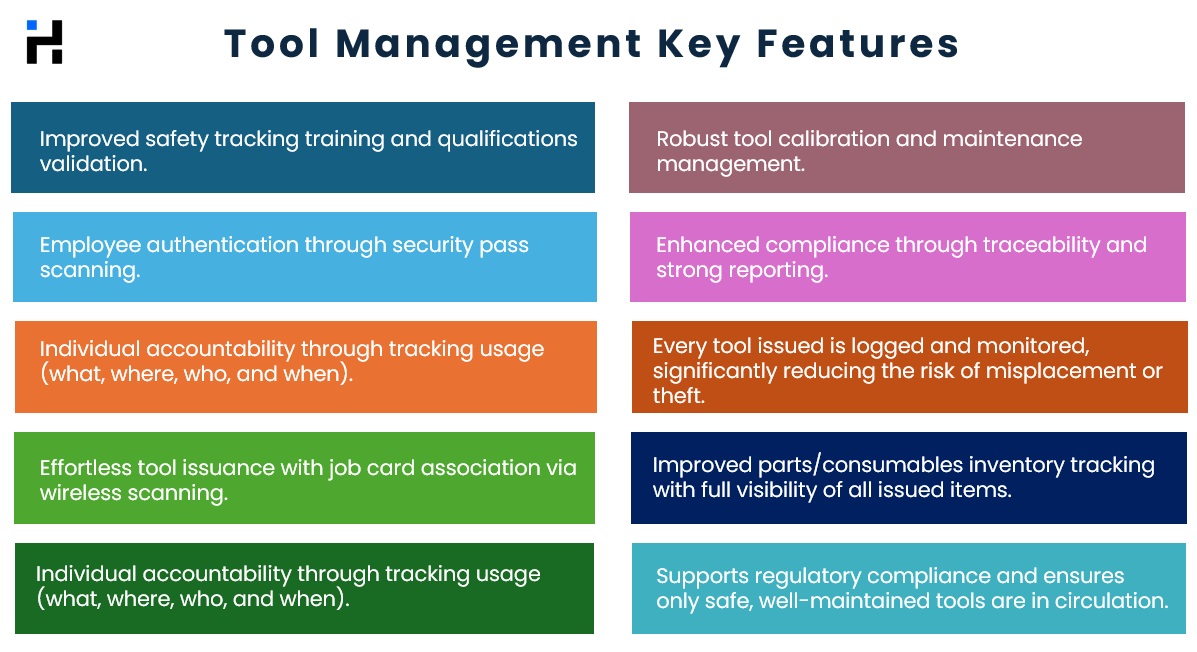
Hardcat’s tool tracking system was implemented at BAE Systems Australia’s Osborne Naval Shipyard to replace manual tool management processes with a digital, pass-based asset management capability. The system enables tools and consumables to be checked out and returned using scanning, while recording tool usage, duration, job assignment, and operator qualifications.
Digitalising these processes can improve visibility and accountability while reducing manual data entry, paperwork, and the time spent locating or managing tools and equipment. For large-scale operations, this can help teams work more efficiently while maintaining better control over critical tools and resources.
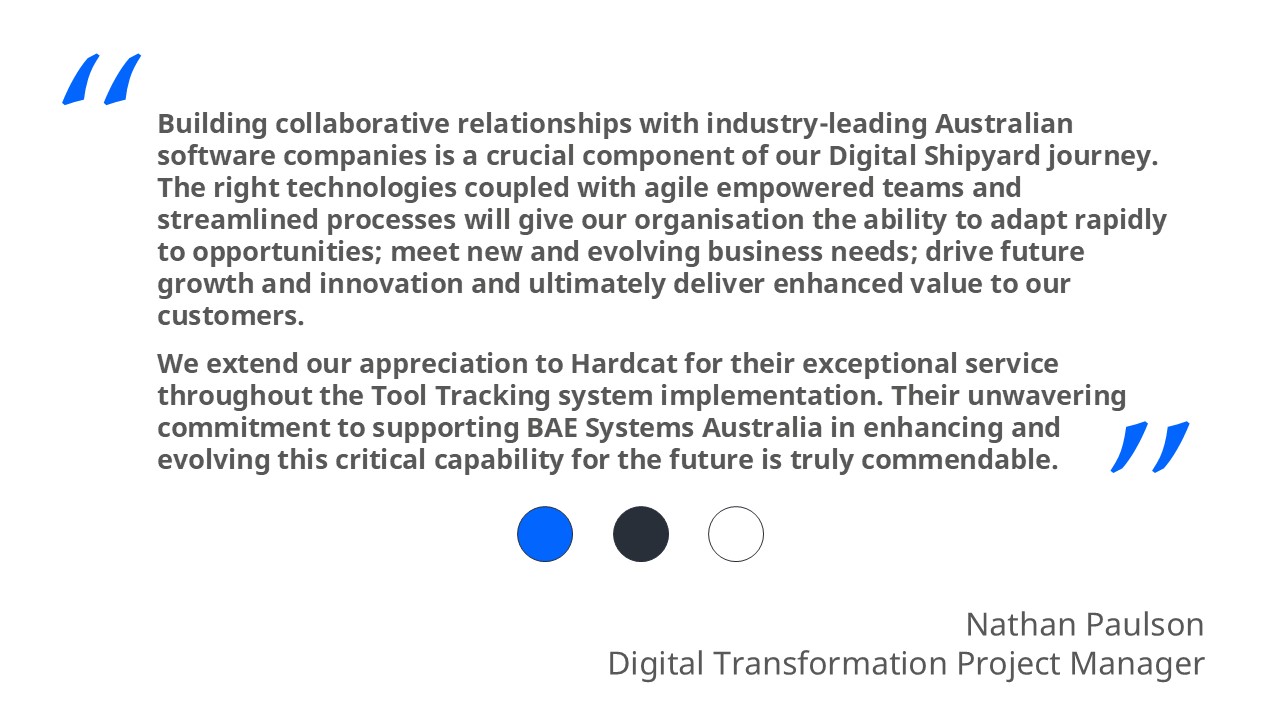
“The Hunter Class Frigate Program is transforming shipbuilding with state-of-the-art manufacturing methods and automated equipment to deliver world-class quality while saving time and money. We’re not only radically improving our construction processes, but we’re also transforming the entire Osborne Naval Shipyard to make it digital.
To enable digital transformation of BAE’s Osborne Naval Shipyard, we’ve implemented several initiatives to strengthen digital threads. Collaborating with Australian company Hardcat, we have introduced a tool tracking system, that replaces manual processes with an innovative pass-swiping asset management capability.
Checking out a tool is now as simple as scanning a pass, the tool or consumable, and then scanning them back in when done. The software also tracks tool usage, duration, job assignment, and operator qualifications which eliminates time, mistakes, and paper.” Digitally transforming the Osborne Naval Shipyard
How can you simplify maintenance and calibrations?
Regular maintenance is vital for keeping tools and equipment in good working condition and extending their operational life. Tracking tools and equipment can simplify maintenance processes by helping organisations schedule servicing, maintain accurate records, and provide timely maintenance reminders. This helps ensure tools are available and fit for use when required.
Accurate calibration and documentation of test equipment are also essential for maintaining measurement accuracy and supporting compliance requirements. Digital tool management can help organisations record calibration intervals, maintain schedules, and retain a history of calibration and maintenance activities. Recording damage, repairs, and other service activities provides a complete history of each tool and helps teams keep equipment maintained and ready for use.
Tool management anytime, anywhere access
Tool management information should be accessible wherever teams need it, whether they are working in a workshop, warehouse, shipyard, or other operational environment. Hardcat provides mobile access to tool and equipment information, helping authorised users check asset details, assignments, status, and other relevant records while working on-site.
Mobile access can reduce reliance on paper-based processes and help teams maintain more accurate and up-to-date tool information. This supports faster access to information, better accountability, and more efficient management of tools and equipment across multiple locations.
Hardcat tool management can support organisations managing large numbers of tools and equipment, with digital processes designed to improve visibility, control, and operational efficiency.
Tool management case study
At Hardcat, we understand the challenges organisations face when managing large numbers of tools and equipment. Hardcat tool management and tracking solutions help organisations improve accountability, streamline tool issue and return processes, manage calibration and servicing requirements, and maintain accurate records of tool status and availability.
The system can record information such as tool identification, issue and return history, location, status, calibration and service history, qualifications, and inventory counts. Business rules can also help ensure tools are issued appropriately based on employee qualifications and requirements.
The Hardcat system rigorously records details for both tools and consumables. This includes critical information like historical issuance and return dates, projected return dates, unique identification tags, serial numbers, tool classifications, calibration and service histories, qualification certificates, present location, and status (e.g., Issued, Available, Quarantined, Retired, Lost and/or Faulty). Additionally, it keeps track of inventory counts and any relevant notes. Business rules consider employee qualifications and certifications. Alerts are generated if a tool is issued to an employee without the necessary compliance or if an employee is issued a tool type they already possess.
From a maintenance standpoint, the system proactively generates alerts to prevent the issuance of a tool if its calibration and/or servicing status (e.g., Quarantined, Retired, Lost, Faulty). Moreover, the solution serves as a valuable asset for overseeing maintenance activities related to tool calibrations, servicing, and Break-Fix status, while also efficiently managing spare parts inventory. Additionally, the system offers a comprehensive array of reports detailing the status and availability of tools and consumables, empowering the organisation to facilitate strategic planning and meet essential compliance requirements. BAE Case Study PDF
Conclusion
Digital processes for managing tools and equipment can improve efficiency, accountability, and visibility compared with manual processes. Digital workflows can reduce administrative effort, improve the accuracy of tool and equipment records, and help teams locate and manage assets more efficiently. Hardcat tool management and tracking solutions help organisations streamline tool issue and return processes, manage maintenance and calibration requirements, and maintain better visibility of tool status, location, and availability.
Learn more about our tool management and tracking solution in our online brochure.