In many organisations, asset management operates in the background—until something goes wrong. Unexpected failures, rising maintenance costs, and compliance risks often point to one issue: a lack of effective lifecycle management. Asset lifecycle management should form the backbone of every organisation, yet as businesses scale and technology advances, these critical back-end processes can quickly become outdated or overlooked.
In an environment of growing competition, evolving regulations, and constant technological change, regularly reviewing your asset management strategy is essential. Without it, organisations risk missing out on cost savings, operational efficiency, and more effective risk management.
An asset management strategy is a plan for managing an organisation’s assets throughout their lifecycle—from acquisition and deployment to maintenance and disposal—to maximise value, control costs, and reduce risk. It aligns asset decisions with business objectives, ensures compliance, monitors performance, and incorporates sustainability considerations, enabling organisations to make informed decisions, improve efficiency, and extend the life of critical assets. Asset Management Leadership
Asset management is often overlooked as a strategic driver of cost savings, particularly due to its perceived complexity. Effective asset management must span the full lifecycle of physical assets, from commissioning through to operation and end-of-life. However, many existing models remain inefficient, failing to fully account for total lifecycle costs and broader sustainability considerations.
Asset lifecycle management encompasses an asset’s entire journey, including acquisition, deployment, maintenance, and disposal. By optimising each stage, organisations can enhance performance, extend asset lifespan, and reduce costs. Key functions include tracking procurement, scheduling maintenance, monitoring utilisation, and managing decommissioning. A robust lifecycle management approach not only improves operational efficiency, but also supports better decision-making and more sustainable use of resources.
What are the asset lifecycle management functions?

Rethink asset management to maximise resources
Compliance is a constant concern for any industry and size of business. Regulations around data privacy, equipment safety, and environmental standards aren’t static; they evolve and get more stringent. And let’s face it: the bigger the organisation, the bigger the risk of falling out of compliance and the more it costs to rectify. A well-maintained asset management strategy keeps assets tracked, compliant, and ready for audits, reducing the chance of costly fines or reputational damage.
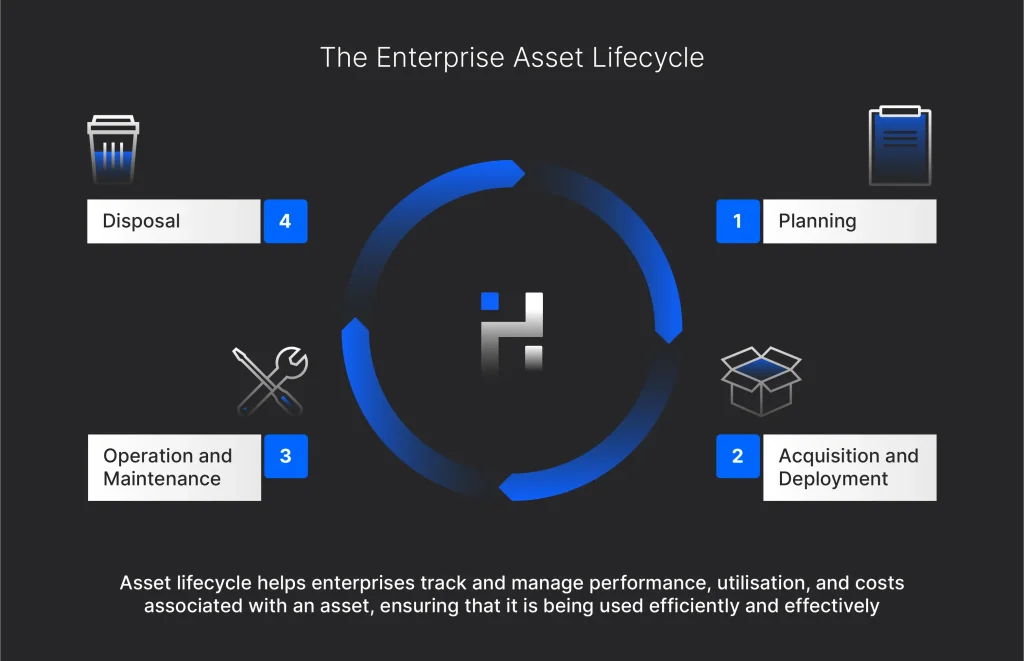
Think of it like this: if your asset tracking is outdated, you’re risking not just fines but also the trust of your customers and partners. Revisiting asset management practices means you’re adapting to new compliance standards and ensuring that everything stays up to date. This proactive approach not only keeps you legally safe but also builds credibility and confidence among stakeholders, employees, and partners.
How do you reduce operational inefficiencies?
Large organisations struggle with inefficiencies in their operations. When you’ve got thousands of assets to manage spread over different locations (and sometimes different countries), it’s easy for some of them to be underutilised or even forgotten. Revisiting your asset management strategy allows you to identify bottlenecks and pinpoint where resources are being under- or over-used. For instance, some equipment might be sitting idle while other departments are scrambling for similar resources—leading to wasted time and excessive purchasing.
Improving asset lifecycle management—tracking each asset’s journey from purchase through use, maintenance, and sustainable/ethical disposal—can help avoid these inefficiencies. Imagine what it would mean to fully utilise your equipment: you’d reduce unnecessary repairs, eliminate redundant purchases, and streamline workflows across departments and locations. This not only enhances productivity but can also be a morale booster, as employees feel supported by well-maintained, available resources.
Get a handle on costs and boost ROI
A solid long-term optimum approach to asset management is directly linked to cost savings. When assets aren’t tracked properly, companies often end up paying for duplicate resources or unplanned repairs. With asset tracking, you can see exactly where your budget is going, which assets are driving up costs (excessive maintenance or break downs), and where you can make savings.
For instance, transitioning to a data-driven approach that tracks asset performance and maintenance allows you to predict maintenance needs. Instead of scrambling when equipment breaks down, you can handle repairs on a schedule, with alerts being sent to crews, which saves both time and money. Imagine the financial relief in preventing just a few major breakdowns each year—those savings quickly add up, making a clear case for revisiting how assets are managed.
Improve decision-making with real-time insights
Busy organisations need quick reports and accurate data to make informed decisions. An outdated asset management system will be a barrier to this, creating a time lag between what’s happening on the ground and what’s visible in reports. Revisiting the strategy lets organisation integrate real-time tracking technology such as IoT into their asset management system. Think cloud platforms that provide instant access to asset data and apps that provide asset data ‘on-the-go when you are out on-site.
With this level of visibility, executives and managers can make smarter and quicker decisions. Based on the asset management system data in real-time. For example, if one location’s equipment is in heavy use while another’s sits idle, resources can be shifted. Meet demand without additional expenses. Better visibility also supports strategic planning, allowing organisations to anticipate needs and stay agile.
Redefining asset management: the Hardcat solution
Our enterprise asset management solutions support large businesses and government organisations in their digital transformation journey. Our inhouse developed specialist software suite serves as a dynamic single source of truth. Revolutionising the way businesses manage their asset base. Hardcat operates under the mantra of actionable intelligence that delivers asset certainty. Assisting customers not only meet their compliance obligations, but also enabling them to produce proof of compliance when required.
Conclusion
Enhance your asset utilisation, simplify maintenance processes, and optimise overall asset management. Hardcat solutions incorporate the latest in Barcode and RFID technology in both fixed and mobile readers. Clients using Hardcat solutions have reported dramatic cost and time savings which directly translates into bottom line results.
Ready to Boost Efficiency?
Request a Demo of Our Solutions Today!