
Asset management GRC (Governance, Risk, and Compliance) is an integrated framework that ensures organisations manage their assets-such as equipment, tools, and infrastructure-effectively throughout their lifecycle, from acquisition to disposal.
This approach combines three essential pillars:
- Governance, which establishes clear roles, responsibilities, and processes for asset oversight.
- Risk management, which identifies and mitigates potential threats to asset performance and organisational objectives.
- Compliance, which ensures adherence to legal, regulatory, and internal policy requirements.
By aligning these elements, asset management GRC transforms what could be a costly administrative burden into a strategic management tool, enabling organisations to optimise asset performance, minimise risks, and maintain regulatory compliance. Ultimately supporting business success and resilience in a dynamic environment.
What is asset management compliance?
Effective asset management is the coordinated activity of an organisation to realise value from its assets and is dependent on accurate, up-to-date, and quality asset information. This requires asset management to interact with many functions and departments of an organisation as assets can touch many areas.
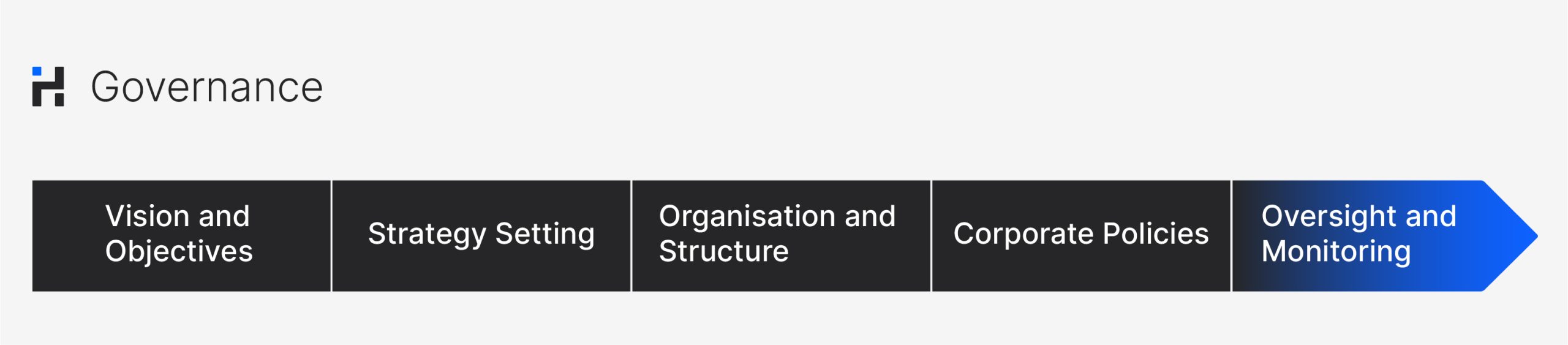
Governance can be best described as the process and structures used to direct and manage the business and affairs of an organisation in a planned and ethical manner, with the ultimate goal of achieving financial viability and creating value for the business.

Risk is a set of recognised potential events that will prevent the company from achieving its objectives.

Compliance involves understanding and delivering on the expectations and obligations of all internal and external stakeholders, taking both legal obligations and voluntary standards into consideration.
Asset management risks and controls
Asset management risks refer to the potential challenges or threats that could negatively impact the effective handling, operation, and value of an organisation’s assets. These risks can include loss, theft, damage, inaccurate tracking, poor maintenance, non-compliance with regulations, and financial losses.
Controls are the measures or processes put in place to manage, reduce, or eliminate these risks. They can include policies, procedures, technological tools, regular audits, security protocols, and accountability mechanisms designed to safeguard assets, ensure accurate records, maintain compliance, and optimise asset performance.
Together, asset management risks and controls form a system of governance that helps organisations protect their investments, make informed decisions, and meet operational and regulatory objectives effectively.
To control these risks effectively, organisations implement:
Governance: Clear roles, responsibilities, and policies that define asset oversight and accountability.
Regular Audits and Inspections: Frequent physical and digital checks to verify asset existence, condition, and compliance status.
Accurate Record-Keeping: Maintaining comprehensive, up-to-date asset registers with unique identifiers (e.g., barcodes, RFID).
Preventive Maintenance Programs: Scheduling maintenance activities to avoid unexpected asset failures and prolong lifespan.
Security Controls: Restricting access to sensitive assets through role-based permissions and secure storage.
Compliance Monitoring: Ensuring adherence to legal, regulatory, and internal standards with automated alerts and reporting.
Training and Awareness: Educating staff on proper asset handling, compliance obligations, and risk mitigation.
Technology Use: Leveraging asset management software with real-time tracking, integration, and analytics to detect anomalies and support informed decision-making.
Risk Assessments: Regularly evaluating vulnerabilities and potential asset-related risks to proactively address issues before they escalate.
By combining these controls in an integrated asset management governance, risk, and compliance (GRC) framework, organisations optimise asset performance, minimise financial and operational risks, and ensure regulatory compliance.
What are the four primary risks to effective asset management?
A sustainable GRC organisation should have a framework and management structure that include clearly defined roles, responsibilities, activities, and systems to analyse and manage each recognised aspect of GRC. The objective is to transform these activities from a costly burden into a strategic management tool, enabling the company to respond flexibly and effectively to changing stakeholder demands and lay a solid foundation for business success.
1. Not knowing what you have
In common manufacturing industry jargon, this is known as the FDH (Fat, Dumb and Happy) approach to asset management. While it might seem intuitively obvious, many organisations either don’t appreciate the need to know with an elevated level of confidence, the assets that they have, or they choose not to take the time to do so.
2. Over or under maintenance
During the operational phase of the asset lifecycle, there can be a problem of over-maintaining as well as under-maintaining. The key issue regarding maintenance typically involves two issues that will make the asset management system ineffective.
Firstly, there is a significant cost associated with the execution of non-value-added maintenance. In this regard, the cost can be loosely used as a guideline since there are well-documented industry benchmarks for maintenance spending that can be followed.
Secondly, the typical organisation that can be accused of over-maintaining its assets will be performing intrusive maintenance tasks more frequently.
Maintenance is often viewed as a business expense open to cutting like any other to maximise profits. With these pressures, maintenance departments are constantly struggling with how to balance cost with the performance requirements for the assets such as reliability and uptime.
3. Improper operation
Many organisations suffer first of all from a lack of understanding of the inherent design capabilities of their assets and secondly, how best to operate within their ranges to optimise the asset lifecycle. For some assets, either operating below or above the design range adversely affects the life of the asset.
4. Improper risk management
The basic tenet of best practices asset management dictates that a plan is implemented that not only manages the operation and maintenance of an organisation’s assets but also manages the risks associated with the ownership and use of the assets. Risk, in its most elementary form, is a function of consequences and the likelihood of such an event taking place.
Risk management takes place on two major fronts: 1) assessment or identification; and 2) management and controls. Each area, when not done well, is a continued contributor to ineffective asset management.
What is the value of effective asset management?
Improved financial performance:
Improving the return on investments and reducing costs can be achieved while preserving asset value and without sacrificing the short or long-term realisation of organisational objectives.
Informed asset investment decisions:
Enabling the organisation to improve its decision-making and effectively balance costs, risks, opportunities, and performance.
Managed risk:
Reducing financial losses, improving health and safety, goodwill and reputation, and minimising environmental and social impact, can result in reduced liabilities such as insurance premiums, fines, and penalties.
Improved services and outputs:
Assuring the performance of assets can lead to improved services or products that consistently meet or exceed the expectations of customers and stakeholders.
Demonstrated social responsibility:
Improving the organisation’s ability to, for example, reduce emissions, conserve resources, and adapt to climate change, enables it to demonstrate socially responsible and ethical business practices and stewardship.
Demonstrated compliance:
Transparently conforming with legal, statutory, and regulatory requirements, as well as adhering to asset management standards, policies, and processes, can enable demonstration of compliance.
Enhanced reputation:
Through improved customer satisfaction, stakeholder awareness and confidence.
Improved organisational sustainability:
Effectively managing short and long- term effects, expenditures, and performance, can improve the sustainability of operations and the organisation.
Improved efficiency and effectiveness:
Reviewing and improving processes, procedures and asset performance can improve efficiency and effectiveness, and the achievement of organisational objectives.
Effective asset management is an integrated approach to optimising the lifecycle of your assets, tools, and equipment, beginning at purchase through to usage, decommissioning, and disposal. By acknowledging and paying attention to the risks to effective asset management you can put in place plans to mitigate the effects.
- Increase stakeholder and asset value.
- Meet GRC objectives and plan with consistency across the entire organisation.
- Keep customers and other stakeholders happy.
- Recognise the need to replace/refurbish assets when they reach the end of the lifecycle.
- Identify and evaluate the unusual performance of assets.
Strategic enterprise asset management is established to address asset management for long-term planning of your assets, maintenance, and operations. Asset management and asset tracking is critical to a successful business strategy and builds a culture of responsibility.
Conclusion
A successful asset management GRC implementation requires planning, resources, and viewing it as a major change, not just a project. This is challenging and often benefits from change management experts and asset specialists. Human resources and business processes are vital to asset management, and neglecting them can hurt the bottom line.
In conclusion, integrating GRC (Governance, Risk, and Compliance) into asset management is no longer just a best practice, it’s a necessity for organisations aiming to thrive in today’s complex regulatory and operational landscape. By adopting a GRC-driven approach, businesses can safeguard their assets, reduce risks, and ensure ongoing compliance, all while unlocking greater value and efficiency.
As the demands on organisations continue to evolve, those that prioritise asset management GRC will be better positioned to adapt, innovate, and achieve sustainable success. Now is the time to view asset management not just as a routine process, but as a strategic pillar supporting your organisation’s long-term goals.
Ready to Boost Efficiency?
Request a chat with our experts today!