Weapons and armoury asset management is critical for defence forces, law enforcement agencies and security organisations responsible for controlling firearms, ammunition, operational equipment and other mission-critical assets.
Effective management requires more than knowing where an asset is — organisations need clear visibility of who has custody of each asset, whether it is authorised for use, its maintenance and service history, and whether it is ready when required.
Hardcat provides a centralised approach to tracking, accountability and lifecycle management, combining asset identification technologies such as RFID and barcode with digital workflows, audit trails, maintenance management and personnel controls.
Tracking, Accountability & Lifecycle Control
Effective weapons and armoury management requires a complete and reliable record of every controlled asset. Each weapon, item of equipment or supporting asset can be uniquely identified and associated with its location, status, assigned personnel and relevant transactions. This provides organisations with a clear view of what assets they hold, where they are, who has responsibility for them and whether they are available for use.
Digital workflows can record the issue and return of assets, transfers between locations, inspections, maintenance activities and other authorised transactions. Combined with barcode and RFID identification, this reduces reliance on manual records and provides a consistent audit trail of asset movements and activity.
Accountability also extends beyond physical location. Organisations need to know whether an asset is authorised for issue, whether required maintenance or inspections have been completed, and whether the personnel receiving it are appropriately qualified. By bringing these records together, asset managers can support stronger control, improve readiness and respond quickly when an asset or transaction needs to be investigated.
Complete Asset Lifecycle
Weapons and controlled equipment need to be managed throughout their entire lifecycle, not only when they are issued to personnel. From acquisition and identification through storage, issue, transfer, maintenance, return and eventual retirement, every stage creates important records that contribute to asset accountability and operational readiness.
This lifecycle approach is consistent with the broader principles of modern asset management, which emphasise managing assets throughout their lifecycle and aligning asset management activities with organisational objectives. ISO 55000:2024 provides an international framework for asset management principles and lifecycle thinking.
A complete digital record allows authorised personnel to quickly establish an asset’s current status, location, custody and history. Issue and return transactions can be recorded alongside inspections, maintenance activities, transfers and other lifecycle events, creating a continuous history for each asset.
This approach is particularly important where equipment must be available when required but cannot be issued when it is undergoing maintenance, inspection or repair. By connecting asset status, personnel, location and maintenance information, organisations can improve control while reducing manual administration and the risk of incomplete or outdated records.
For defence and law enforcement organisations, lifecycle management provides the foundation for reliable accountability — ensuring that assets can be tracked from the moment they enter service through to their final disposition.
Weapons management doesn’t end when an asset is issued — it continues through every inspection, maintenance event, transfer and return.
RFID & Barcode Tracking
Accurate identification is fundamental to effective weapons and armoury asset management. RFID and barcode technologies provide a reliable way to identify individual weapons, equipment and supporting assets, allowing organisations to maintain accurate records and quickly confirm what an asset is, where it is located and who is responsible for it.
Barcode scanning provides a simple and cost-effective method for issuing, returning and auditing assets, while RFID can support faster identification of multiple assets and improve visibility across larger inventories. Both technologies can be integrated with asset management workflows to reduce manual data entry and improve the accuracy of asset records.
For defence and law enforcement organisations, identification technology is particularly valuable during routine inventory checks, asset transfers, issue and return processes and maintenance activities. Each scan can update the central asset record and contribute to a complete history of the asset’s movements, transactions and maintenance.
When combined with digital asset management, RFID and barcode tracking help organisations move beyond periodic stocktakes towards continuous visibility and accountability across the asset lifecycle. This is especially important for weapons, ammunition, protective equipment, tools and other controlled assets where knowing exactly what is held, where it is and who has responsibility is critical.
Digital Chain of Custody
A complete digital chain of custody provides a clear and defensible record of every movement, transaction and change associated with a weapon or controlled asset. From initial issue through transfer, return, inspection and maintenance, organisations can record who had responsibility for an asset, when the transaction occurred and what happened to the asset throughout its lifecycle.
For defence forces and law enforcement organisations, this level of accountability is essential when managing firearms, ammunition, specialist equipment and other controlled assets. Instead of relying on paper records, spreadsheets or disconnected systems, a centralised asset management solution can bring custody, personnel, location and asset status information together in one accessible record.
A digital chain of custody can provide visibility of:
- Asset identity — the specific weapon, equipment or controlled asset involved.
- Custody and responsibility — who has been issued or assigned the asset.
- Location — where the asset is currently held or deployed.
- Issue and return history — when assets were issued, transferred or returned.
- Asset status — whether an asset is available, issued, under inspection, under maintenance or otherwise unavailable.
- Maintenance history — inspections, servicing and repairs associated with the asset.
- Audit history — a traceable record of authorised transactions and changes.
By combining digital chain of custody with asset identification, personnel controls, inventory management and lifecycle tracking, organisations can establish a more secure and efficient approach to weapons and armoury management — while reducing manual administration and strengthening operational readiness.
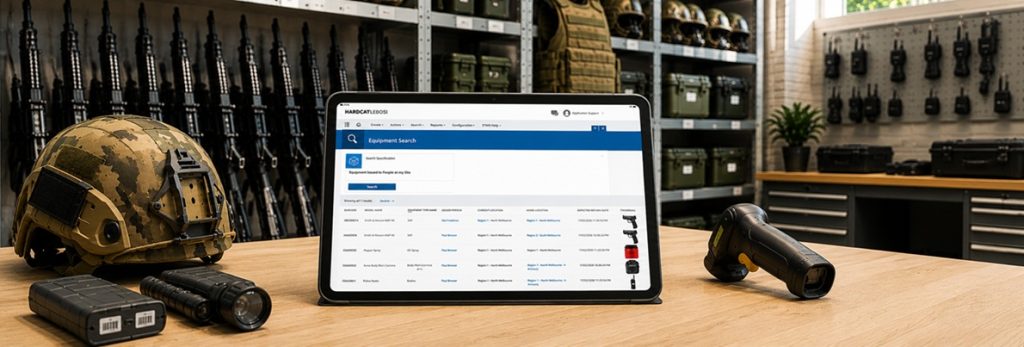
Effective weapons accountability means knowing what an asset is, where it is, who is responsible for it and whether it is ready for use.
Weapons & Armoury Video
See how Hardcat Lebosi supports the management, tracking and accountability of weapons, armoury and other critical assets throughout their lifecycle. Watch the short video for an overview of the solution.
Weapons and Armoury Inventory Management
Managing weapons and armoury assets requires more than maintaining a list of equipment. Defence and law enforcement organisations need a current view of what assets they hold, where those assets are located, who they are assigned to and whether they are available for use.
A centralised asset management system provides visibility across armouries, bases, depots and operational locations, helping organisations control inventory, reduce unnecessary purchases and identify equipment that is missing, under maintenance, due for replacement or no longer required.
- Centralised inventory visibility — Maintain a current record of weapons, equipment and armoury assets across bases, depots and operational locations.
- Controlled issue and return — Record who receives each asset, when it is issued and returned, and the location and status of every transaction.
- Personnel accountability — Link assets to authorised personnel and ensure the right equipment is issued to the right person.
- Asset status and availability — Quickly identify assets that are available, issued, under maintenance, awaiting inspection or unavailable for use.
- Maintenance and service history — Track inspections, maintenance activities and service records to support asset readiness and extend equipment life.
- Complete audit trail — Maintain a detailed history of asset movements, transactions and changes to support accountability, investigations and compliance.
- Reduce unnecessary inventory costs — Use accurate asset data and usage history to identify duplication, under-utilised equipment and replacement requirements.
Hardcat Lebosi brings these capabilities together in a centralised asset management platform designed for complex, high-security environments. It enables defence and law enforcement organisations to manage weapons, equipment, personnel, locations, maintenance and transactions within a single system, providing the visibility and control needed to support accountability, operational readiness and informed asset management decisions.
Issue, Return & Accountability
Weapons and controlled equipment need to be issued to authorised personnel quickly while maintaining a clear record of responsibility. A digital issue and return process allows organisations to record who received an asset, when it was issued, where it was issued and when it was returned, creating an auditable record of every transaction.
Personnel controls can also be linked to asset issuance, helping organisations confirm that equipment is being issued to appropriately authorised and qualified personnel. This is particularly important where weapons, specialist equipment or other controlled assets require specific qualifications, training or approval before use.
With Hardcat Lebosi, issue and return transactions can be captured through barcode and RFID identification, reducing manual data entry while maintaining a complete history of asset movements. This helps armoury and logistics teams process transactions efficiently while maintaining accountability for every controlled asset.
- Rapid issue and return — Record transactions quickly while maintaining an auditable history.
- Personnel accountability — Link assets to the personnel responsible for them.
- Authorisation controls — Support controlled issuance based on personnel qualifications and requirements.
- Asset status visibility — Identify whether equipment is issued, available, under maintenance or awaiting return.
- Complete transaction history — Trace every issue, transfer and return throughout the asset lifecycle.
Maintenance, Inspection & Readiness
Weapons and armoury assets must be maintained, inspected and available for use when required. Managing these activities through disconnected records or manual processes can make it difficult to determine which assets are ready for deployment, which require inspection and which are unavailable due to maintenance or repair.
A centralised asset management system provides a complete view of each asset’s maintenance and inspection history. Organisations can record scheduled inspections, maintenance activities, repairs and service events alongside the asset’s issue, location and custody history.
This helps armoury and maintenance teams identify assets requiring attention before they are issued, while providing a clear record of completed work. Maintenance schedules can also be used to support preventive maintenance, helping reduce equipment downtime and improve asset availability.
With Hardcat Lebosi, maintenance information forms part of the wider asset lifecycle record, connecting maintenance activities with the equipment, personnel and locations involved. This gives defence and security organisations greater visibility of asset readiness and helps ensure controlled equipment is maintained to the required standard.
Key benefits
- Scheduled inspections — Track inspections and maintenance requirements before equipment is issued.
- Readiness visibility — Quickly identify assets that are ready, unavailable or require maintenance.
- Complete maintenance history — Maintain a record of inspections, repairs, servicing and other maintenance activities.
- Preventive maintenance — Schedule required maintenance to help reduce unexpected equipment downtime.
- Connected asset records — Link maintenance activity with the asset’s custody, location and lifecycle history.
Defence Asset Management Brochure
Explore Hardcat’s approach to weapons, armoury and Defence asset management.
Our Defence brochure provides an overview of how Hardcat Lebosi supports asset lifecycle management, chain of custody, inventory, maintenance and operational readiness across complex Defence environments.
Download the Defence Asset Management Brochure
Strengthen Weapons & Armoury Management
Effective weapons and armoury asset management requires more than knowing what equipment an organisation owns. Defence and security organisations need continuous visibility of assets, personnel, locations, custody, maintenance and readiness across the complete asset lifecycle.
Hardcat Lebosi brings these capabilities together in a centralised asset management platform, helping organisations improve accountability, streamline issue and return processes, strengthen maintenance and inspection controls, and maintain accurate records for critical and controlled assets.
Whether managing a single armoury or assets across multiple bases and operational locations, Hardcat provides the visibility and control needed to support operational readiness, compliance and informed asset management decisions.