
Organisations across all sectors rely on effective asset management to improve operational efficiency, control costs and make better use of asset data. For asset-intensive organisations, accurate asset information and effective maintenance can directly influence operational performance and financial outcomes.
Managing asset information manually through spreadsheets or across disconnected systems can create data silos, increase administrative effort and make it harder to identify issues before they affect operations. Without a centralised view of asset information, organisations may incur unnecessary maintenance, replacement and compliance costs.
Enterprise Asset Management (EAM) software provides a structured way to manage asset information, maintenance, workflows and performance throughout the asset lifecycle. By bringing asset data together and making it accessible to the people who need it, EAM helps organisations improve visibility, control costs and make more informed decisions.
How EAM software improves ROI and operational efficiency
Enterprise Asset Management (EAM) software can improve ROI by helping organisations control costs, reduce operational inefficiencies and make better use of their physical assets. These benefits extend beyond maintenance to include asset utilisation, inventory management, compliance, workforce productivity and capital planning.
For asset-intensive organisations, EAM connects asset data, maintenance activities and operational processes within a centralised system. This gives organisations greater visibility into asset performance, helping them identify opportunities to reduce avoidable costs, improve asset reliability and make more informed decisions.
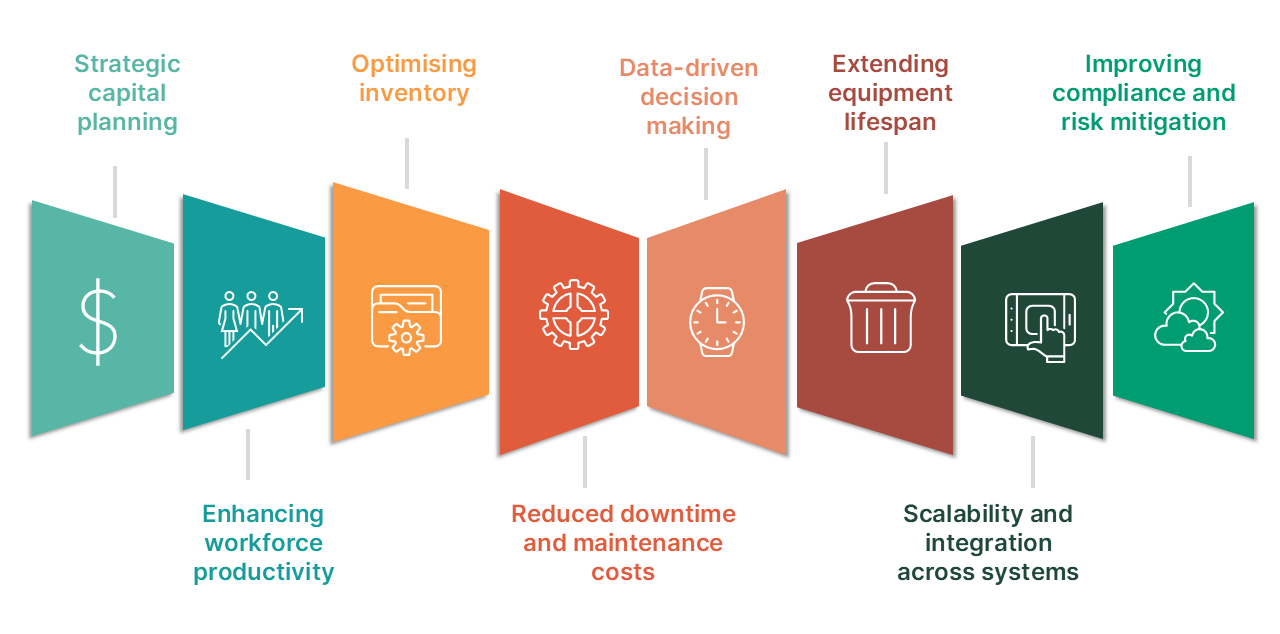
Key ways EAM software can improve ROI include:
- Consolidating asset data
- Reducing downtime and maintenance costs
- Extending asset lifespan
- Improving compliance and mitigating risk
- Optimising inventory
- Enhancing workforce productivity
- Supporting strategic capital planning
- Enabling data-driven decision-making
- Scaling and integrating across systems
Consolidating asset data for better decisions
Organisations managing assets across multiple systems can struggle to establish a complete and reliable view of their asset information. Asset records may be spread across spreadsheets, maintenance systems, financial platforms, procurement systems and other business applications, making it difficult to understand the full picture.
Common asset data challenges include:
- Asset data spread across separate systems and formats
- Duplicate, incomplete or inconsistent information
- Significant manual effort required to bring data together
- Limited context and governance for turning asset data into useful information
Consolidating asset information into a centralised system gives organisations a more consistent view of the assets they own, where those assets are located, who is responsible for them, their condition, maintenance history and lifecycle status.
However, consolidation alone isn’t enough. The quality of the information matters. Organisations need to establish what asset information should be captured, how it should be structured and how it will be maintained over time. This creates a stronger foundation for reporting, analysis and informed asset-management decisions.
Reducing downtime and maintenance costs with EAM software
Effective maintenance helps keep assets available, reliable and productive. Reactive maintenance can leave organisations dealing with unexpected breakdowns, unplanned downtime, emergency repairs and higher maintenance costs.
Enterprise Asset Management (EAM) software helps organisations move from reactive maintenance towards more planned and proactive approaches. By bringing maintenance records, work orders, schedules and asset history together, EAM gives maintenance teams better visibility into asset condition and performance.
This centralised view can help organisations plan maintenance more effectively, identify recurring issues and schedule work at appropriate times to minimise disruption. It also provides historical data to support more informed maintenance decisions.
EAM software can support preventive maintenance strategies by:
- Recording asset condition, usage and maintenance history
- Scheduling routine maintenance based on usage, condition or time intervals
- Helping maintenance teams identify potential issues and plan follow-up work
Key benefits of proactive maintenance include:
- Reducing downtime: Identifying potential issues early and planning maintenance can help reduce unplanned stoppages and emergency repairs.
- Controlling maintenance costs: Better maintenance planning can reduce avoidable production losses, emergency servicing and reactive maintenance costs.
- Extending asset lifespan: Planned maintenance can help manage wear and support assets throughout their intended lifecycle.
- Supporting compliance and risk management: Accurate maintenance records and documented work histories can help organisations demonstrate compliance and manage operational risk.
Proactive maintenance can help organisations move from reactive responses to more planned, data-informed maintenance strategies. By combining maintenance history, asset information and scheduled work, EAM can help reduce avoidable disruption and make better use of maintenance resources.
Extending asset lifespan
Effective maintenance can help organisations extend the useful life of their assets and delay unnecessary replacement. EAM software brings asset condition, maintenance history and servicing schedules together, helping organisations assess asset condition and make informed decisions about servicing, refurbishment or replacement.
EAM software can help organisations extend asset life by:
- Tracking maintenance history, warranties and asset condition
- Scheduling planned maintenance at appropriate intervals
- Recording and managing repairs, refurbishments and component replacements
Extending asset life can influence total cost of ownership and capital planning. By maintaining accurate asset records and using maintenance and condition data to guide servicing and replacement decisions, organisations can better assess when to repair, refurbish or replace an asset. This can help avoid premature replacement and support more effective lifecycle management.
Improving compliance and risk mitigation
Non-compliance with regulatory and safety requirements can expose organisations to financial penalties, operational disruption, legal costs and reputational damage. Maintaining accurate asset and maintenance records can help organisations demonstrate that required inspections, servicing and other compliance activities have been completed.
EAM software can support compliance management by:
- Maintaining digital audit trails and maintenance records
- Scheduling inspections and tracking compliance activities
- Providing reports and documentation to support audits and regulatory requirements
Optimising inventory
Optimising inventory can help organisations reduce excess stock, improve working-capital efficiency and ensure critical parts are available when needed. For asset-intensive organisations, accurate information about asset usage, maintenance requirements and spare-parts demand helps teams make more informed decisions about stock levels and purchasing.
EAM software can support inventory management by:
- Using maintenance schedules and asset history to help anticipate parts demand
- Managing stock levels and reorder thresholds
- Connecting procurement decisions with asset usage data
Enhancing workforce productivity
Maintenance teams can lose valuable time searching for information, locating parts and tools, waiting for equipment or completing administrative tasks. EAM software can help reduce these inefficiencies by giving teams easier access to asset information, maintenance records and work instructions.
EAM software can support workforce productivity by providing:
- Mobile access to work orders, asset information and maintenance documentation
- Visibility into asset locations and maintenance status
- Tools for task assignment, scheduling and work tracking
Strategic capital planning
Accurate asset lifecycle, condition and performance data can help organisations make better-informed capital planning decisions. By understanding asset condition, risk and lifecycle costs, organisations can identify assets that may require replacement or refurbishment, prioritise investment and align capital expenditure with operational needs.
EAM can support strategic capital planning by helping organisations:
- Assess asset condition and performance when considering replacement or refurbishment
- Identify underperforming or high-cost assets for review
- Prioritise capital investments based on asset needs, risk and operational priorities
Using asset data to measure performance
Reliable asset data helps organisations assess whether their asset management decisions are delivering the expected operational and financial outcomes. By reviewing asset utilisation, maintenance costs and performance trends over time, teams can identify where performance is improving and where further action may be needed.
EAM software can help organisations evaluate asset performance through:
- Monitoring KPIs such as Mean Time Between Failures (MTBF) and asset utilisation
- Reviewing maintenance costs and performance trends over time
- Comparing asset performance across locations, asset groups or types
Scaling and integrating across systems
As organisations grow, their asset portfolios and operational requirements can become increasingly complex. EAM software needs to scale with that growth while connecting asset information with the business systems organisations already rely on.
Integration can connect asset data across business systems, helping reduce duplicate data entry, improve information consistency and give teams a more complete view of asset information across the organisation.
Hardcat Lebosi is designed to operate alongside existing enterprise systems rather than requiring organisations to replace them. Its [integration capabilities support connections with ERP, finance, HR and other business applications, while its open architecture and integration framework can support more complex integration requirements.
EAM software can support organisations by:
- Connect asset information with existing enterprise systems
- Reduce duplicate data entry and disconnected asset records
- Adapt asset management capabilities as organisational requirements change
Conclusion: EAM as a strategic investment
Enterprise Asset Management (EAM) software can deliver value beyond day-to-day maintenance by helping organisations control costs, improve asset utilisation and make better-informed decisions across the asset lifecycle. By connecting asset information with maintenance and operational processes, EAM can help organisations reduce avoidable expenditure, improve asset performance and make more effective use of their resources.
The value of EAM depends on more than the software itself. Organisations need reliable asset data, clearly defined processes and systems that support the way people work. With these foundations in place, EAM can provide a more connected view of assets, maintenance and operational performance, helping organisations make informed decisions and manage assets throughout their lifecycle.
Ready to improve your asset management strategy?
Explore how Hardcat Lebosi can help your organisation improve asset visibility, control costs and make better-informed decisions across the asset lifecycle.
Contact Hardcat to discuss your asset management requirements and explore how an EAM solution can support your organisation.